Medicare Clinic in Reading & Cardiff
Tel: 0772 330 3324

Cert.no.CRT1-470316920
Phone Bookings
0772 330 3324
9am - 9pm (7 days a week)
Language
Medicare Clinic in Reading & Cardiff
Tel: 0772 330 3324
Cert.no.CRT1-470316920
Phone Bookings
0772 330 3324
9am - 9pm (7 days a week)
Language
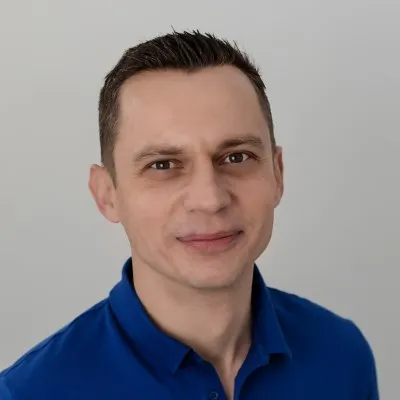
Dr Jerzy Kucharski is a specialist in orthopaedics and traumatology of the musculoskeletal system. He completed his medical education at the Pomeranian Medical University in Szczecin, graduating in 2004. Since then, he has focused his professional career on diagnosing and treating disorders of the musculoskeletal system—the complex framework of bones, joints, muscles, and connective tissues that allows the human body to move.
His clinical work includes both conservative treatment and surgical intervention, depending on the condition and the needs of the patient. A significant part of his practice involves minimally invasive surgical techniques. These modern procedures reduce tissue trauma and allow patients to recover faster compared with traditional surgery. Among the operations he performs are arthroscopic procedures of the shoulder, knee, and hip joints. Arthroscopy uses small instruments and a camera inserted through tiny incisions, allowing the surgeon to repair damaged structures inside the joint with remarkable precision.
Dr Kucharski also performs reconstructive procedures and joint replacement surgeries when degenerative damage becomes advanced. His work frequently involves treating fractures, sports injuries, chronic overload injuries, and various conditions affecting tendons and ligaments. Many patients seek his help for degenerative joint disease, which gradually damages cartilage and can lead to pain, stiffness, and reduced mobility.
In recent years, Dr Kucharski has expanded his surgical practice by using modern 3D surgical planning in shoulder joint replacement procedures in Poland. This technology allows surgeons to analyse the patient’s anatomy in great detail before surgery, improving implant positioning and overall surgical accuracy. In practical terms, it means more personalised procedures and potentially better long-term outcomes for patients.
Beyond technical skill, patients often value something harder to measure—human approach. Dr Kucharski is widely appreciated for combining efficiency with genuine dedication and professionalism. Many patients highlight his positive attitude and clear communication, which can make a considerable difference when someone is facing pain, injury, or surgery.
His reputation among patients has been reflected in public recognition as well. In recent years he has been a three-time finalist in the Hippocrates Medical Awards Poland voting for the most popular doctor in the West Pomeranian Voivodeship, a distinction based largely on patient nominations and community support.
In his medical practice, Dr Kucharski offers diagnosis and treatment for a wide range of orthopaedic conditions, including degenerative changes affecting joints—particularly the knee, shoulder, and hip—treated either conservatively or with joint replacement when necessary. He also helps patients suffering from back pain and strain-related conditions.
Ultrasound diagnostics of joints is another important part of his work, allowing for fast and accurate evaluation of soft tissues such as tendons, ligaments, and bursae. He treats traumatic injuries of the musculoskeletal system, including sports injuries and their long-term consequences.
Inflammatory conditions such as arthritis, tendinitis, and bursitis are also commonly managed in his practice. Many patients experience overload injuries caused by repetitive movement or physical strain, including conditions like tennis elbow, golfer’s elbow, jumper’s knee, and shoulder impingement syndrome.
Dr Kucharski also diagnoses and treats compression syndromes affecting peripheral nerves, such as carpal tunnel syndrome, Guyon’s canal syndrome, and ulnar nerve entrapment. Additionally, he provides treatment for foot deformities including hallux valgus and hammer toes, which can significantly affect comfort and mobility if left untreated.
For patients with joint pain related to cartilage degeneration, he also performs therapeutic injections with hyaluronic acid, which can help improve joint lubrication and reduce discomfort.


From May 2018, in compliance with the General Data Protection Regulation (GDPR), each patient having an appointment will be asked to consent to processing and storing their data, including the right of the clinic to contact the patient via phone, SMS, e-mail (including sending newsletters) or by post. The patient has a right to object to us using their personal contact details. Please note that this, however, will result in:
• the clinic being unable to contact the patient to change, confirm or cancel appointment
• the doctor being unable to contact the patient to discuss the test results or answer patient’s query
• the clinic being unable to send laboratory test results
• the clinic being unable to send newsletters to inform about our new services or exclusive offers
• the clinic being unable to send invoices for service received at the clinic
• the clinic being unable to send medical reports, medical documentation, treatment plans
• the patient being unable to use our credit facilities
• the patient being unable to book an appointment via our website
All information given will be kept confidential. No personal details will be passed on to third parties nor shared with companies / people outside of the company other than our subcontractors doctors working on a self-employment basis.
Clients/patients have the right to be forgotten. If an individual makes a written request to be forgotten, we must remove all data from our databases, which processes are handled by our manager.
Please note that we will be unable to erase client medical records, which are required as evidence of our clinical practice.
We will however, be able to delete individuals personal data from any email correspondence, booking and contact form data such as name, email, phone, DOB, contact message.
Calls may be monitored and recorded for record-keeping, training and quality-assurance purposes. You may, however, object to your conversation being recorded by informing our receptionist at the beginning of the conversation.
• The General Data Protection Regulation (GDPR)
• Regulation of Investigatory Powers Act 2000 (“RIPA”)
• Telecommunications (Lawful Business Practice)(Interception of Communications) Regulations 2000 (“LBP Regulations”)
• The Employment Practices
• Human Rights Act 1998


